Vehicle First Aid Kits: HSA Eligibility and What to Look For
9 min reading time
9 min reading time
Most vehicle first aid kit components qualify as HSA and FSA-eligible medical expenses under IRS Publication 502. The standard is clear: if the kit's contents are for diagnosing, treating, or preventing injury, they qualify. This guide covers which components meet that standard, what to look for when selecting a vehicle kit, how to document purchases correctly, and how to keep your kit functional over time.
The IRS applies a primary purpose test. Bandages, gauze, antiseptic wipes, tourniquets, hemostatic gauze, chest seals, pressure dressings, trauma shears, splints, CPR masks, and cold packs all qualify — each has a direct medical function and serves no other purpose. Over-the-counter pain relievers, antihistamines, and burn creams also qualify as of 2020 rule changes. No prescription is required for these items.
General-purpose items that happen to be stored in a first aid kit do not qualify: carrying pouches or bags unless sold as part of a clearly medical kit, flashlights, multi-tools, and general toiletry items. The primary purpose test is the deciding factor. A tourniquet has one function; a backpack has many.
Pre-assembled kits labeled HSA/FSA-eligible are the simplest path — every component has been identified as medical, and the receipts and contents manifests support that. If you're building a custom kit, each item still qualifies individually by the same standard, but you'll need itemized receipts for each purchase to support a reimbursement claim.
Field Note: Card Declined? Submit for Reimbursement
When your HSA card processes a kit purchase at checkout, the card network checks whether the merchant category and item codes are flagged as medical. If a card is declined on a valid item, pay another way and submit an itemized receipt for reimbursement — the eligibility standard hasn't changed, just the checkout routing.
A vehicle kit must address the injuries most likely in a roadside incident: lacerations, abrasions, and hemorrhage. At minimum, stock sterile gauze pads in 2×2 and 4×4 sizes, adhesive bandages across multiple sizes, medical tape, elastic bandages for compression and splint support, and trauma dressings for heavier bleeding. Antiseptic wipes and nitrile gloves complete the basics.
A vehicle kit that can't manage serious trauma is inadequate for anyone who drives in areas with delayed EMS response. The following components extend capability to life-threatening scenarios:
| Component | Function | HSA Eligible |
|---|---|---|
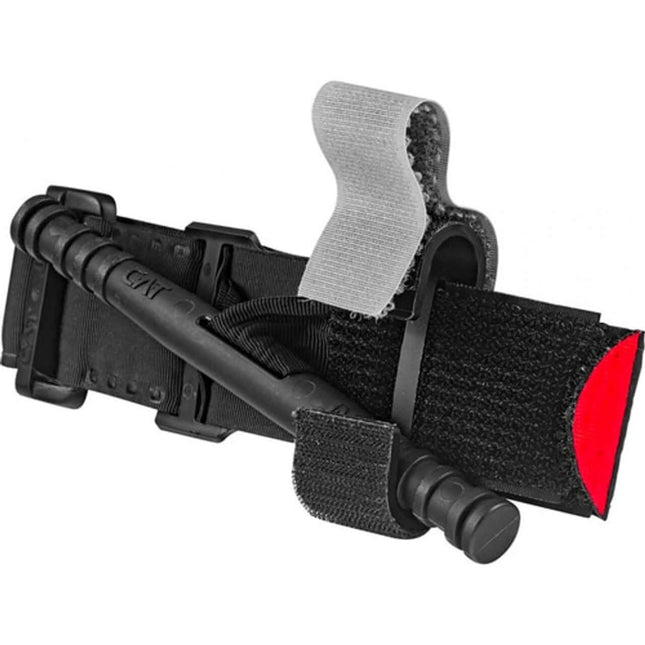
| Tourniquet (CAT) | Severe extremity hemorrhage control | Yes |
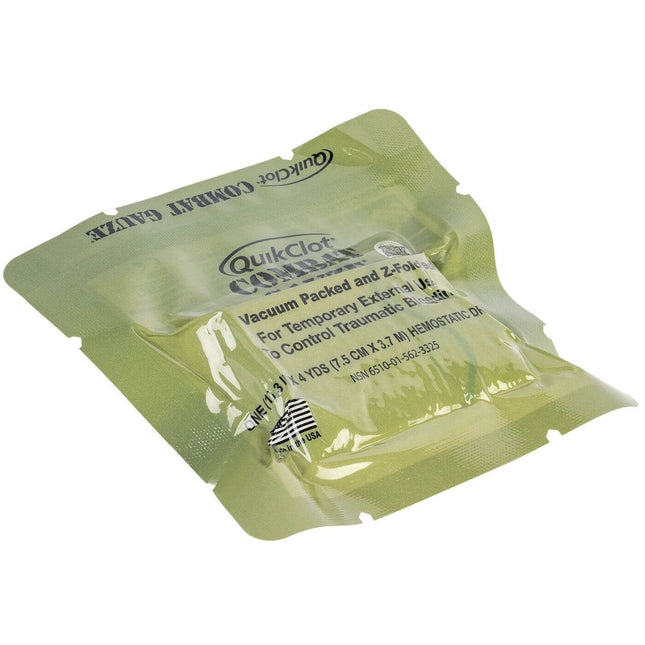
| Hemostatic Gauze | Junctional wound packing | Yes |
| Chest Seal (vented) | Penetrating chest trauma | Yes |
| Pressure Dressings | Wound closure and bleeding control | Yes |
| Splinting Materials | Fracture stabilization | Yes |
| Thermal Blanket | Hypothermia and shock prevention | Yes |
| CPR Mask | Respiratory emergencies | Yes |
| Trauma Shears | Clothing and seatbelt removal | Yes |
A daily commuter in an urban area has different risk exposure than someone who regularly drives remote highways or off-road routes. A compact basic kit covers the commuter's likely scenarios: minor cuts, scrapes, and common ailments. A driver who frequently travels remote routes or across state lines with limited EMS access needs full trauma capability — tourniquet, hemostatic gauze, chest seal, and pressure dressings.
Consider also who regularly rides with you. Households with children should include pediatric-sized bandages. Passengers with chronic conditions — severe allergies, diabetes, cardiac history — may require specific additions beyond any standard kit.
Piece count is not a reliable quality indicator. Evaluate kits on component-level quality: are the tourniquets windlass-style with documented field performance? Is hemostatic gauze kaolin-based, FDA-cleared, and CoTCCC-recognized? Are dressings individually packaged with intact seals? Counterfeit tourniquets are a documented market problem — verify the supply chain and buy from vetted sources. A smaller kit with tested, reliable components outperforms a larger kit full of unbranded supplies.
Keep itemized receipts that list each component by product name with price and date. A receipt showing only a total is insufficient for HSA reimbursement documentation. For pre-assembled kits, request the contents manifest from the vendor — it identifies each component by product name and medical function. The IRS can audit HSA expenditures for three years; keep both receipts and contents manifests on file.
A first aid kit that hasn't been inspected in two years is not a prepared kit. Conduct a full inventory check at minimum twice annually. The daylight saving time changes are a reliable calendar anchor. At each check: verify expiration dates, confirm packaging integrity on sterile items, inspect tourniquet windlass function, and replace any used or expired components immediately.
| Item Type | Typical Shelf Life | Notes |
|---|---|---|
| Sterile Dressings / Gauze | 3–5 years | Check individual packaging dates |
| Antiseptic Wipes / Solutions | 1–2 years | Can dry out; replace on schedule |
| Ointments / Creams | 2–3 years | Potency decreases post-expiration |
| Adhesive Bandages | 3–5 years | Adhesive degrades over time |
| Hemostatic Gauze | 3–5 years | FDA-cleared; check per-unit expiry |
| Tourniquet | 5+ years | Inspect windlass, strap, and buckle |
Vehicles parked in direct sun reach interior temperatures well above 100°F — store the kit under a seat or in a temperature-buffered compartment rather than in the trunk or on a rear deck. Organize the kit so critical items — tourniquet, hemostatic gauze, chest seal — are accessible without removing other supplies first. In an emergency, seconds spent digging through a disorganized bag have consequences.
The Vehicle First Aid Kit covers everyday roadside needs in a compact soft-sided case designed for glove compartment or under-seat storage. It includes wound care essentials, trauma shears, and a CPR shield — appropriate for commuters and daily drivers.
For drivers who frequently travel remote routes or need full trauma capability in the vehicle, the Rip-Away Tactical Trauma Kit provides a complete hemorrhage control and trauma loadout in a MOLLE-compatible rip-away configuration, mountable to vehicle seating or interior panels.
The Vehicle & Marine Kits collection lists all ViTAC vehicle options across capability levels and price points.
Most vehicle first aid kits with medical-purpose contents qualify. Look for kits labeled HSA/FSA-eligible, or verify that the components individually meet the IRS medical expense standard. The kit's carrying case may not qualify if it has general utility beyond medical use; the medical contents do.
No. Bandages, gauze, antiseptic wipes, tourniquets, and most first aid supplies are over-the-counter medical items. No prescription is required for HSA/FSA purchase. Keep itemized receipts documenting each component.
Inspect at least twice a year and replace used or expired items immediately. Key expiration windows: antiseptic wipes (1–2 years), ointments (2–3 years), sterile dressings and hemostatic gauze (3–5 years), tourniquets (5+ years with annual functional inspection).
Most vehicle first aid kit components qualify for HSA and FSA purchase without a prescription. The right kit matches your actual driving profile — a commuter kit and a remote-route trauma kit have different requirements. Document every purchase with itemized receipts, inspect twice a year, and replace components before expiration dates arrive.
Start with the Vehicle First Aid Kit for everyday coverage, or step up to the Rip-Away Tactical Trauma Kit if your driving profile requires full trauma capability.

OSHA minimum workplace kits don't include a tourniquet. Here's how to calculate station count, stock each station, and build bleed control coverage in any public...

One kit at the main entrance fails the 90-second coverage rule for most buildings. Here's how to run a coverage audit and calculate the correct...

Arterial hemorrhage kills in 3 minutes. Urban EMS takes 7–10. Every business needs CoTCCC-standard bleed control kits — here's how to select, deploy, and train...

40+ states mandate bleed control kits in schools — but most deployment plans miss classrooms and buses. Here's the placement standard that actually works.

Most of our trauma kits and first aid supplies qualify for HSA and FSA reimbursement. Don't let your benefits expire — invest them in gear that could save a life.


$124.95


$279.99

$37.49 - $139.46


$299.95 $269.95


$139.95 - $169.95

$49.95


$25.99


$164.95

We've been downrange. We know what it costs to be unprepared. ViTAC was built by U.S. Army Special Operations veterans to make sure the people who run toward the threat — and the families who depend on them — have gear that works when everything is on the line.
— ViTAC Solutions Founders | 40+ years combined Special Operations experience