Most people operate without any trauma kit at all. The ones who decide to carry gear then face a second decision: which kit format fits their actual mission. The wrong choice is gear that stays in the truck when you're on the trail, or a pouch too large to carry daily. This guide covers the four primary kit formats — EDC, IFAK, vehicle, and backpack — and how to match each to the scenario it solves.
The Four Kit Formats
EDC (Everyday Carry) Kit — Minimum Viable Trauma Gear
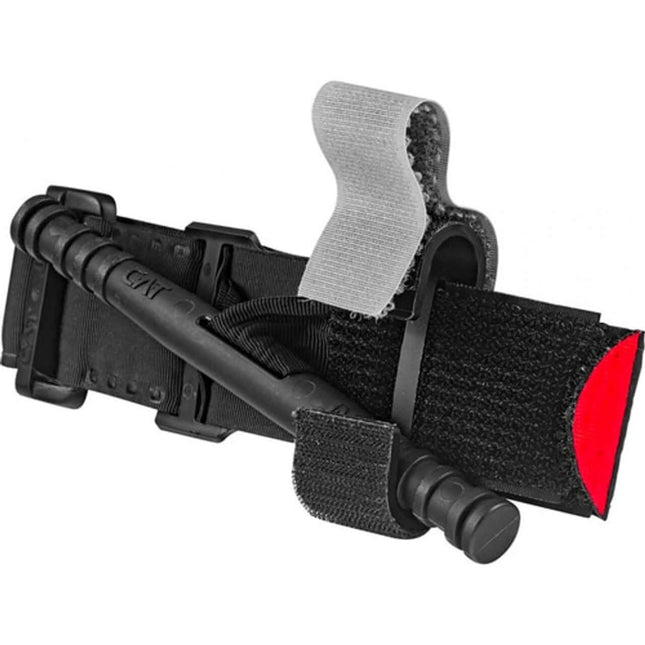
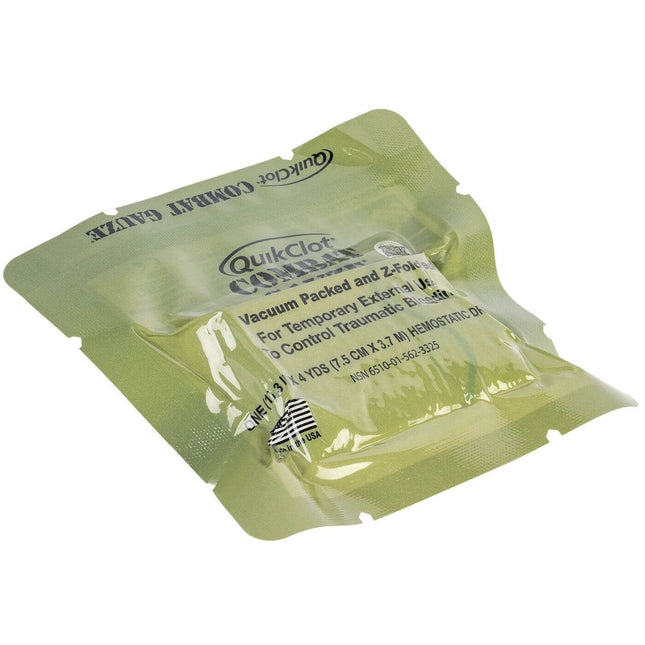
An EDC trauma kit is the smallest format: a single tourniquet, compressed hemostatic gauze, and a pair of nitrile gloves in a pocket-sized pouch or ankle rig. The principle is constraint — not every item from the TCCC loadout, only the ones that address an arterial bleed in the first three minutes. If you carry a firearm daily, you carry a tourniquet and gauze at the same level of access. The Premium IFAK Trauma Kit is a compact build that fits this role and scales to on-body or vehicle carry.
IFAK — Personal Trauma Kit
The IFAK is the full TCCC loadout in a carry-sized pouch: tourniquet, hemostatic gauze, pressure dressing, paired vented chest seals, nasopharyngeal airway, trauma shears, and gloves. It is sized for one casualty's interventions, carried on the individual, and deployed within 5 seconds one-handed. The Tactical Trauma Kit w/Rip-Away Feature is built to this spec — rip-away pouch for immediate deployment from any position.

Vehicle Kit — Expanded Capacity at the Platform
A vehicle kit lives in the truck, not on the person. Size and weight constraints are relaxed, which means you can carry multiples of critical items — two or three tourniquets, additional hemostatic gauze, chest seals for multiple casualties — plus items that don't make sense for personal carry: burn dressings, splinting materials, an emergency blanket. The Tactical Trauma Backpack is sized for this role, with capacity for multi-casualty response and a platform-agnostic carry system. Browse the full Vehicle-Ready Kits collection for format options.
Backpack / Full Trauma Kit — Extended Operations
For wilderness travel, remote operations, or sustained response scenarios, a full trauma backpack extends beyond bleeding control into comprehensive trauma management: multi-casualty capability, fracture care, burn management, and airway tools beyond the NPA. The Elite Pro-II Trauma Kit (268 components) and Trauma Kit – Patrol Pro w/CAT Tourniquet are built for this tier. These kits assume trained responders who know the scope of care they are equipped to deliver.

Format Comparison
| Feature | EDC Kit | IFAK | Vehicle Kit | Full Trauma Kit |
|---|---|---|---|---|
| Primary purpose | Immediate bleed control — one person | Full TCCC intervention — one casualty | Expanded multi-casualty capability | Comprehensive trauma, remote or sustained ops |
| Tourniquet count | 1 | 1–2 | 3+ | Multiple |
| Carry method | Pocket, ankle rig, small belt pouch | On-person MOLLE, rip-away, plate carrier | Door pocket, trunk bag, seat mount | Backpack, staged kit bag |
| Governing standard | CoTCCC minimum | TCCC / CoTCCC | TCCC + expanded trauma | TCCC + WFA or EMS-level protocols |
| Training required | Stop the Bleed | Stop the Bleed minimum; TCCC preferred | TCCC preferred | TCCC, WFA, or EMS certification |
The format that stays home because it's too heavy is the wrong format.ViTAC Kit Selection Doctrine
Matching Format to Mission
Daily carry — armed or unarmed civilians
If you carry a firearm, you carry a tourniquet at the same level of access. An EDC trauma kit — tourniquet, hemostatic gauze, gloves — belongs in the same draw line as your sidearm. For daily carry without dedicated tactical gear, a compact IFAK in a belt pouch or bag hip pocket is the right format.
Hunters, hikers, and remote travelers
Anyone operating more than 15 minutes from EMS carries a full IFAK minimum — and a full trauma backpack if they are the designated safety officer for a group. The backpack format adds splinting, burn, and environmental protection components that remote wilderness trauma may require. Distance from definitive care determines how much gear you carry.
Range and duty use
Two kits: an IFAK on the person for immediate self-aid or buddy-aid, and a vehicle kit or range bag with expanded capacity. The personal IFAK must deploy one-handed and be accessible from multiple positions — MOLLE on a belt, rip-away from a plate carrier, or admin pouch on a range bag. The secondary kit handles overflow and multi-casualty scenarios.
Construction, industrial, and trade work
Job site trauma risk exceeds what OSHA-mandated kits address. An individual IFAK in the personal pack plus a vehicle-staged kit covers the gap. Heavy machinery environments should also include burn dressings and splinting materials in the vehicle kit — these injuries are high-frequency in the sector.
Home preparedness
One IFAK per floor, positioned within 30 seconds of reach for any adult in the household. Supplement with a vehicle-staged kit and a full trauma kit if household members have advanced training. The Family & Home Kits collection covers the household staging range.
If you cannot open your kit and access a tourniquet with one hand — under stress, in the dark, with adrenaline in your system — you do not have a deployable kit. Test it before you carry it. Rip-away designs and clamshell pouches are the standard for a reason. Practice the draw until it is automatic.
Core Components by Format
Every format above the EDC level builds on the TCCC priority order (MARCH): Massive Hemorrhage, Airway, Respiration, Circulation, Hypothermia.
- Tourniquet (CAT Gen 7 or SOFTT-W): CoTCCC-recommended for limb hemorrhage. One per person minimum; three or more in vehicle and full kits.
- Hemostatic gauze (QuikClot kaolin-based): For compressible wounds the tourniquet cannot reach. Required in any kit above EDC level.
- Pressure dressing (ETD or Israeli bandage): Maintains compression hands-free after wound packing.
- Vented chest seals (paired): Entry and exit coverage for penetrating thoracic trauma. IFAK and above.
- Nasopharyngeal airway with lubricant: IFAK and above.
- Trauma shears and nitrile gloves: Every format.
- Emergency blanket, burn dressings, splinting materials: Vehicle kit and full trauma kit.
Bottom Line
Start with a deployable IFAK for daily carry and a vehicle-staged kit for driving. Layer up based on operating environment and training level. Every format above zero is a life-saving upgrade. Start with the Recon IFAK – Pro for your on-body baseline, or browse the full IFAK collection to find the format that matches your mission.