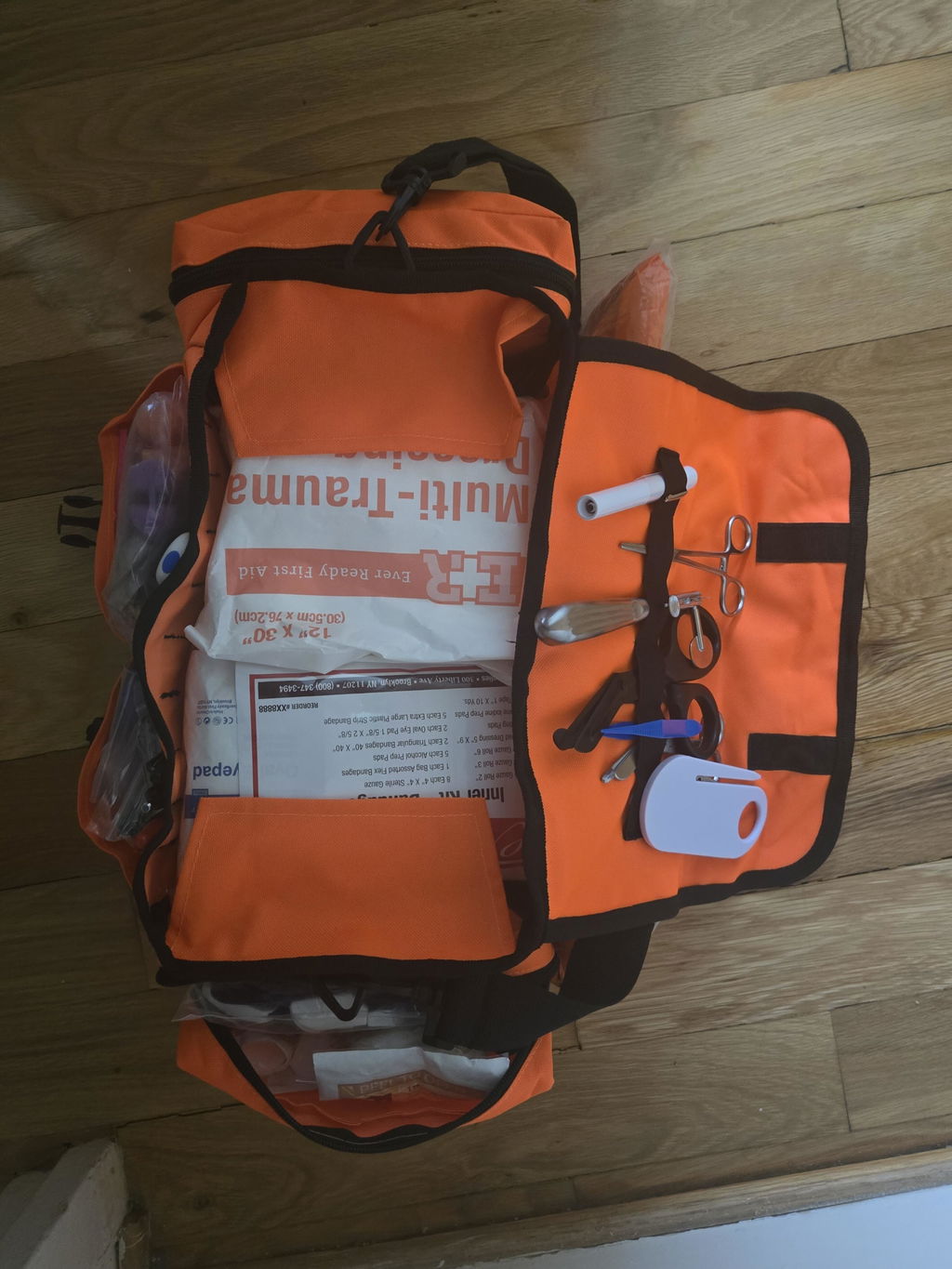
The Elite Bug Out Bag is a 72-hour emergency survival kit built for families who want grab-and-go readiness for hurricanes, wildfires, evacuations, and grid-down scenarios. It packs food, water, first aid, shelter, and survival tools into one transportable bag — so you don't have to assemble preparedness from scratch when minutes matter.
This is a 72-hour kit, not a wilderness expedition system or a tactical trauma loadout. It's built around the FEMA-recommended 72-hour readiness baseline, with consumables rated for a 5-year shelf life so the kit stays viable while it sits in a closet or vehicle.
What you get
Food and water (5-year shelf life): 12 four-ounce water pouches, 9 four-hundred-calorie food bars, 10 water purification tablets, and a 1-liter hydration bag with straw.
First aid and survival tools: deluxe first aid kit, multi-function pocket knife and pry bar, 5-in-1 emergency whistle, nylon rope, work gloves, tarp, multi-function shovel, portable stove, and stainless steel cup.
Light and communication: 4-in-1 dynamo flashlight (no batteries needed), emergency bright stick, flint starter, waterproof matches, and a deck of survival playing cards with emergency tips.
Shelter and warmth: emergency sleeping bag, poncho, 2-person tube tent, and hand and body warmers.
Hygiene and sanitation: deluxe hygiene kit, disposable face masks, biohazard waste bag, wet wipes, pocket tissues, and air freshener.
Bag options: rolling bag (long-distance transport), camo rolling bag (discreet outdoor preparedness), or backpack (lightweight, hands-free mobility). Total weight approximately 20 lbs.
How it fits into your routine
Store the bag in a closet near your main exit, in a hall closet on your evacuation route, or in a vehicle if your storage location stays climate-controlled. Inspect once a year — check expiration dates on food and water, replace consumables as needed, and review tools for damage. Pack any household-specific items (medications, glasses, important documents, kids' comfort items) in a separate companion pouch you can grab alongside the bag.
For families with two or more adults, plan how each person carries which loads during an evacuation. For single-vehicle households, keep the bag near the door. For multi-vehicle households, consider a primary bag plus a backup vehicle kit.
What it is and what it isn't
What it is: a complete 72-hour grab-and-go kit covering food, water, first aid, shelter, light, and basic tools for one person.
What it isn't: a long-term off-grid system, a tactical trauma kit, or a wilderness expedition pack. For trauma capability, pair it with a dedicated bleeding control kit. For longer durations, layer additional water and food storage.
Objection busters
Is 20 lbs too heavy? Most adults can comfortably carry 20 lbs for the short evacuation distances this bag is designed for. The rolling bag option eliminates carry weight entirely if you're moving by vehicle or down hallways.
Will the food and water actually last 5 years? The included consumables are sealed for long-term storage; we recommend an annual check and a full rotation at year 5.
Is this worth it versus building my own? Building an equivalent kit usually costs more once you source quality versions of every component separately, and assembly takes hours. This bag arrives ready.
Who it's for
Families building 72-hour readiness, residents of hurricane and wildfire regions, anyone who wants a single-purchase emergency kit instead of assembling one piece by piece, and households outfitting multiple kits across home and vehicle.
Ready to go bag-ready?
Pick the bag style that fits your scenario and add it to your cart. Pair with a vehicle kit and a home first aid kit for layered preparedness across the locations where emergencies actually happen.