Support & Product Guidance

Frequently
Asked
Questions

Find fast answers on choosing the right trauma kit, IFAK, bleeding control supplies, vehicle kit, adventure kit, or bulk order — so you buy with confidence, not guesswork.

Veteran-owned. Professional-grade. Built for protectors.

87+ Five-Star Reviews HSA / FSA Eligible Free Shipping $100+ 30-Day Guarantee
Quick Links
Kit FinderMatch your kit to your mission
HSA / FSA GuideUse pre-tax health funds
Shipping & ReturnsOrders ship in 24 hours
Bulk & Custom Orders15-unit MOQ, 2-week lead time
Contact ViTAC(307) 202-8426 · info@vitacsolutions.com
Army SF Veteran-Owned 40+ years operational experience
Authentic Components Only CAT, QuikClot, NAR, HyFin — verified
87+ Five-Star Reviews 100% five-star rating
30-Day Money-Back Guarantee Free shipping on orders $100+
Section 01

Choosing the Right Kit

What's the difference between a first aid kit, a trauma kit, and an IFAK?

A standard first aid kit covers everyday injuries — cuts, burns, blisters. A trauma kit is built to control life-threatening bleeding and manage airways until EMS arrives — it includes tourniquets, hemostatic gauze, chest seals, and pressure dressings. An IFAK (Individual First Aid Kit) is a compact, single-person trauma kit designed for fast, one-handed access — the standard for military, law enforcement, and serious prepared civilians.

If you need to stop a major bleed from a car accident, gunshot wound, or puncture injury, you need a trauma kit or IFAK — not a standard first aid kit. Read the full breakdown →

How do I choose between an IFAK, a vehicle trauma kit, or an adventure kit?

Think about where you'll carry it and what risk you're most likely to face:

  • IFAK: On your body, duty belt, plate carrier, or bag. Built for personal trauma response — single person, fast access.
  • Vehicle Trauma Kit: Staged under a seat, in a door pocket, or in your truck bed. Covers you and multiple passengers on the road.
  • Adventure Kit: Trail, backcountry, camping, overlanding. Adds wound care, splinting, and extended field care beyond bleeding control.

Not sure? Use our guided kit selector →

I've never bought a trauma kit before. Where should I start?

Start with what you're most likely to need. For most civilian buyers, that's a vehicle or EDC kit with core bleeding control: a tourniquet, hemostatic gauze, and a pressure dressing. The Emerge OHFAK at $65 is our most popular entry-level trauma kit. The ViTAC Vehicle Trauma Kit covers roadside response for your whole vehicle.

Once you have the basics staged, you can add layers — an EDC wallet kit, a home kit, or an adventure kit. Our IFAK buyer's guide walks through all the considerations.

Do I need training to use a trauma kit from ViTAC?

Training is always recommended — but don't let the lack of it stop you from getting equipped. A tourniquet applied imperfectly is almost always better than no tourniquet at all. Our kits include printed instructions, and we provide walkthrough guides for core skills like tourniquet application, wound packing, and pressure dressing use on our blog.

For hands-on training, ViTAC offers a Life Saver Seminar covering the basics of bleeding control — open to individuals, law enforcement agencies, churches, schools, and community groups. Stop the Bleed courses are also widely available through hospitals and Red Cross chapters.

What's the best trauma kit for a civilian with no military or medical background?

The ViTAC Tactical IFAK is purpose-built for exactly this — professional-grade components (CAT tourniquet, QuikClot, HyFin chest seals) organized so a trained civilian can deploy them fast. If you want to start smaller, the MediTac Premium IFAK at $129.95 is a solid, no-fluff option with authentic components.

For vehicle staging, the ViTAC Vehicle Trauma Kit is our most popular civilian trauma setup — it's designed for roadside emergencies and covers multiple passengers.

What does "TCCC compliant" mean, and does it matter for a civilian buyer?

TCCC (Tactical Combat Casualty Care) is the U.S. military's evidence-based trauma care protocol — the standard for managing life-threatening injuries in the field. A TCCC-compliant kit contains the components required by that protocol: a windlass tourniquet (CAT or SOFTT-W), hemostatic gauze, a pressure dressing, and chest seals.

For civilians, TCCC compliance is a quality signal — it means the kit is built to treat the same catastrophic injuries that kill most preventable trauma deaths (major bleeding and airway obstruction). If a kit is TCCC-aligned, it's not a boo-boo kit. It's built for what actually matters at point of injury.

How many kits do I need for my household or vehicle fleet?

A simple framework: one kit per vehicle, one kit per bag you carry regularly, and one staged at home. If you carry concealed or work in a high-risk environment, add an on-body IFAK or EDC kit to your daily carry.

For families, a good starting ladder is: vehicle kit in each car → a home trauma kit staged near the main entrance → an EDC kit in your everyday bag. Refill and rotate components every 2–3 years or after any use.

What's an EDC kit and is it enough for serious trauma?

An EDC (Everyday Carry) kit is a compact, pocket-sized or wallet-sized trauma kit designed to go with you everywhere without bulk. The NAR EDC Wallet Kit includes a tourniquet, pressure dressing, and gloves — the three tools most likely to stop a preventable death from trauma.

An EDC kit handles the most critical bleeding control in the first minutes. It's not a replacement for a full IFAK or vehicle kit — it's the layer you have on you when everything else is out of reach. Think of it as your zero-delay option. Use it to buy time until a full kit is accessible.

Not sure where to start?
Find your kit in 60 seconds.
Answer a few questions about your role, carry method, and risk environment — get a matched recommendation.
Section 02

HSA / FSA Eligibility

Can I use my HSA or FSA card to buy trauma kits and first aid supplies from ViTAC?

Yes. Most ViTAC trauma kits, IFAKs, tourniquets, hemostatic gauze, bandages, and bleeding control supplies qualify as eligible medical expenses under HSA (Health Savings Account) and FSA (Flexible Spending Account) guidelines. The IRS classifies these as medical care items used for diagnosing, treating, or preventing injury.

At checkout, use your HSA or FSA debit card like a regular payment card. ViTAC provides itemized receipts and product contents lists on request for reimbursement documentation. See the full HSA/FSA guide →

What ViTAC products are HSA/FSA eligible?

The majority of ViTAC's catalog qualifies. This includes trauma kits, IFAKs, bleeding control kits, tourniquets, hemostatic gauze, chest seals, pressure dressings, airway supplies, splints, and most first aid kits. Survival gear and food-based preparedness items typically do not qualify.

Browse our HSA/FSA Eligible collection (49+ products) to shop the confirmed-eligible catalog directly.

Do I need a prescription or Letter of Medical Necessity to use HSA/FSA funds?

Most first aid and trauma supplies don't require a prescription or Letter of Medical Necessity (LMN) — they're considered Over-the-Counter eligible medical items since the CARES Act expanded HSA/FSA eligibility in 2020. Some FSA plans may flag larger purchases or less common items, in which case an LMN from your physician can resolve the issue.

ViTAC provides itemized receipts and product contents lists upon request. Keep your receipt and product documentation if your plan requires manual reimbursement rather than direct card payment. Full eligibility guide →

What's the difference between an HSA and FSA, and which is better for buying trauma gear?

An HSA (Health Savings Account) is available to those on high-deductible health plans and rolls over year after year — funds never expire. An FSA (Flexible Spending Account) is employer-funded and operates on a "use it or lose it" basis each plan year (typically December 31st).

Both can pay for ViTAC products. If you have FSA funds expiring at year end, now is the time to use them — a trauma kit is a legitimate medical purchase, not a workaround. If you have an HSA, you can hold funds indefinitely and purchase when you're ready.

My FSA card was declined at checkout. What should I do?

This can happen if the product isn't yet mapped to a recognized eligible category in the payment processor's database. Try these steps: (1) pay with a regular card, (2) save your itemized receipt from ViTAC, (3) submit for manual reimbursement through your FSA/HSA plan portal.

ViTAC can provide a product contents list and itemized receipt to support your claim. Contact us at info@vitacsolutions.com and we'll get you what you need. Most FSA administrators accept manual reimbursement within 5–10 business days of submission.

Are individual supplies like tourniquets and QuikClot gauze HSA/FSA eligible?

Yes. Standalone tourniquets (CAT, SOFTT-W), hemostatic gauze (QuikClot, Celox), pressure dressings, chest seals, and airway supplies all qualify as eligible medical items. This makes them ideal HSA/FSA purchases whether you're restocking an existing kit or building one piece by piece.

Browse HSA/FSA eligible supplies →

Use your benefits before they expire
Shop HSA/FSA eligible trauma kits and supplies.
49+ products confirmed eligible. Pay at checkout with your HSA or FSA card.
Section 03

Trauma Kits & IFAKs

What should every trauma kit include at minimum?

A minimum viable trauma kit covers the three main causes of preventable death from traumatic injury:

  • Major bleeding: Windlass tourniquet (CAT or SOFTT-W) + hemostatic gauze + pressure dressing
  • Chest wounds: Vented chest seals (entry and exit)
  • Airway: Nasopharyngeal airway (NPA) if you're trained to use one

That's the MARCH framework — Massive Hemorrhage, Airway, Respiration, Circulation, Hypothermia. Every ViTAC trauma kit is organized around this priority sequence. Learn the MARCH protocol →

What's the difference between a MOLLE pouch IFAK and a rip-away IFAK?

A MOLLE IFAK attaches to webbing on a plate carrier, duty belt, or bag via MOLLE loops — it stays in place until you unclip it. A rip-away IFAK is designed to detach in a single motion — ideal when speed matters and someone else needs to pull your kit off you to render aid.

For law enforcement, military, and armed professionals, rip-away is the preferred standard. For vehicle, bag, or home staging where someone isn't accessing the kit under fire, MOLLE or standard zip pouches work fine. Most ViTAC kits are MOLLE-compatible; look for "rip-away" in the product name for pull-tab detach capability.

How long do components in a trauma kit last before they expire?

Most trauma kit components have a shelf life of 3–5 years from the manufacture date, though some may vary:

  • Tourniquets (CAT, SOFTT-W): 3–5 years. Check for UV degradation and strap integrity annually.
  • Hemostatic gauze (QuikClot, Celox): 3–5 years sealed. Never use after expiration — effectiveness decreases.
  • Chest seals: 3–5 years. Check packaging for tears or delamination.
  • Pressure dressings: 3–5 years sealed.

Inspect kits annually. Replace anything approaching or past its expiration date. ViTAC sells all components individually for restocking. Shop refill packs →

What brands does ViTAC carry, and are they authentic?

Every kit ViTAC sells contains authentic, verified components from trusted manufacturers. We are authorized resellers of North American Rescue (NAR), Elite First Aid, MediTac, Emerge Survival, Snakestaff Systems, and ZOLL. We carry authentic CAT (Combat Application Tourniquet) Gen 7, QuikClot hemostatic gauze, HyFin chest seals, and SOFTT-W tourniquets — the same components used by U.S. military and law enforcement.

We never source from gray-market suppliers or unverified overseas manufacturers. Our founders have used this gear operationally — they know the difference, and they won't sell junk. About ViTAC →

What is the ViTAC brand IFAK, and how does it compare to other kits?

The ViTAC Tactical IFAK is built to TCCC standards by Army SF veterans who've used this gear in the field. It contains 58 pieces including a CAT Gen 7 tourniquet, QuikClot Combat Gauze, HyFin vented chest seals, and a nasopharyngeal airway — organized for speed, not looks.

Compared to budget kits with generic or unverified components, the ViTAC IFAK uses only name-brand, field-proven gear. It costs more because what's inside actually costs more — and because the difference between a real CAT and a knockoff can be measured in seconds you don't have.

What's the best trauma kit for a school resource officer or law enforcement officer?

For SROs and law enforcement, we recommend TCCC-aligned kits with rip-away access, duty-belt or vest mounting, and full hemorrhage/airway/chest coverage. The NAR SRO Crisis Response Kit is purpose-built for school resource officers. For patrol duty, the NAR Patrol Vehicle Trauma Kit is our top recommendation for vehicle staging.

We've supplied 23+ law enforcement agencies. If you're outfitting a department or unit, request a quote →

Are ViTAC trauma kits good for EMS and first responders?

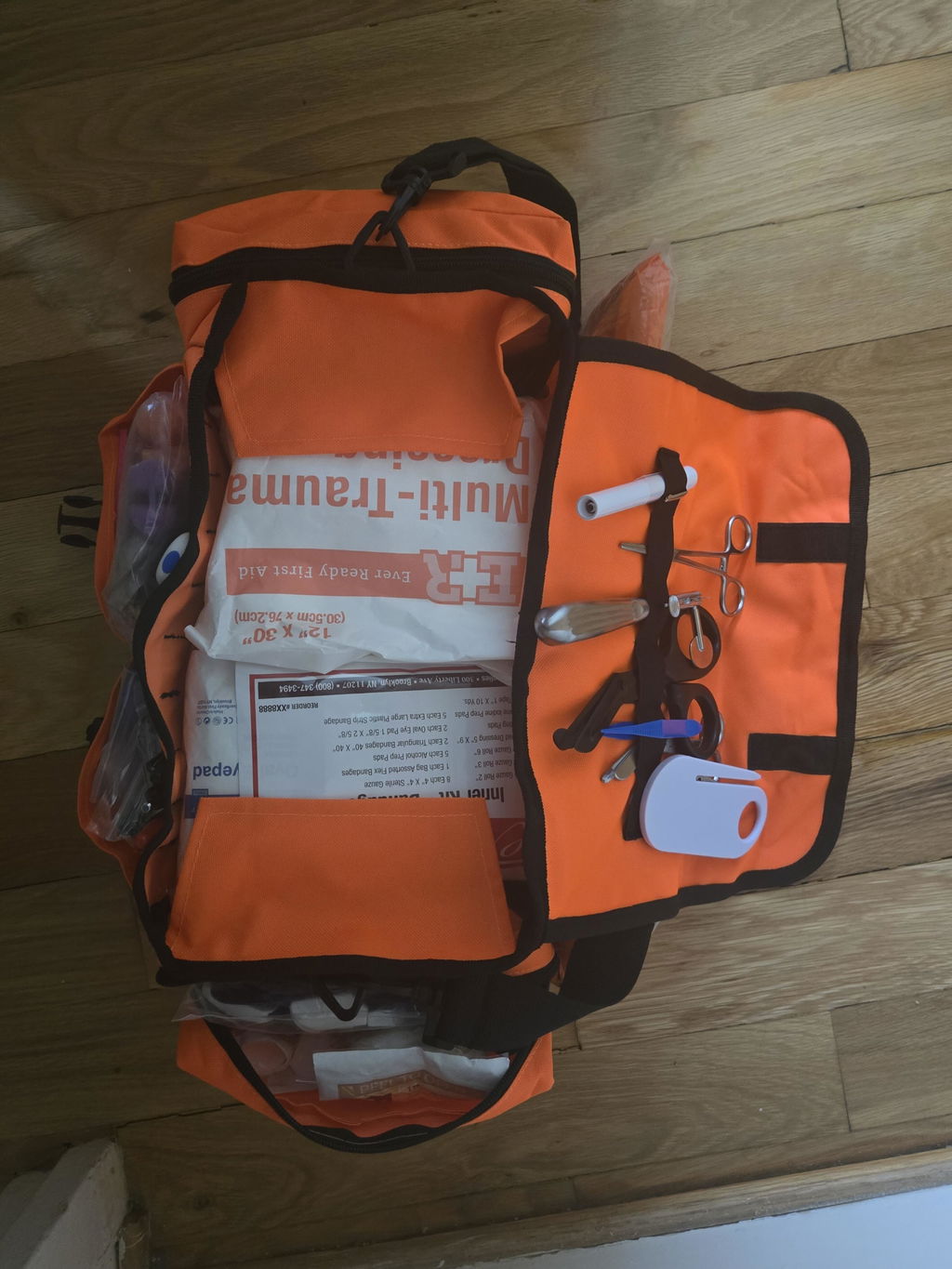
Yes. ViTAC carries a full range of EMS jump bags and first responder kits — from compact 80-piece backup bags to the 380-piece Elite First Responder Jump Bag and NAR's CCRK combat casualty response system. Many first responders also purchase personal IFAKs from ViTAC because they prefer to carry their own standardized kit over issued gear.

For agency procurement, we support volume orders with PO acceptance and custom configurations. Browse EMS kits →

Section 04

Vehicle First Aid Kits

Why do I need a vehicle trauma kit if I already have one at home?

Motor vehicle accidents are one of the leading causes of traumatic injury — and they happen miles from your home kit. A staged vehicle kit is about reducing the time between injury and intervention. In a major bleed, you have roughly 3–5 minutes before blood loss becomes critical. Your home kit can't help you on the highway.

Vehicle kits are also built to cover multiple passengers — not just you. The ViTAC Vehicle Trauma Kit is specifically designed for roadside deployment with multiple occupants in mind.

Where should I store a trauma kit in my vehicle?

The best location is accessible without leaving the driver's seat — or reachable by a front passenger. Common staging positions: under the driver or passenger seat, in the door pocket, behind the center console, or mounted to the headrest. The NAR Headrest IFAK mounts directly to your headrest for immediate grab access.

For trucks and SUVs with bed storage, stage a larger kit in a pelican or hard case in the bed — and keep a smaller EDC kit in the cab for immediate access. Don't let it live in your trunk where it's unreachable during an emergency.

What's the difference between the ViTAC Vehicle Trauma Kit and a standard car first aid kit?

A standard car first aid kit handles minor roadside injuries — cuts, scrapes, bandaging. The ViTAC Vehicle Trauma Kit is built to manage life-threatening emergencies: arterial bleeds, chest injuries, and airway compromise. It contains military-grade components — tourniquet, hemostatic gauze, chest seals, NPA, pressure dressings, and more — organized for speed and clarity under stress.

Standard car kits are fine for minor injuries. For the kind of emergencies that kill people before EMS arrives, you need trauma capability. The difference in price is small. The difference in outcome can be everything.

Will heat or cold in a parked vehicle damage trauma kit components?

Most trauma components are designed to withstand the temperature ranges of normal vehicle storage. Extreme heat (above 130°F, common in parked cars in summer) can accelerate degradation of latex gloves and packaging seals over time. In very cold climates, tourniquets may stiffen slightly but function normally once handled.

Best practice: inspect your vehicle kit at least twice per year — before summer and before winter. Replace any components with compromised packaging, discoloration, or approaching expiration dates. ViTAC carries all components for individual restocking.

What vehicle kit do you recommend for overlanding and off-road use?

For overlanding and off-road use where EMS response times can be 30+ minutes, we recommend stepping up to a full adventure or IFAK kit rather than a standard vehicle kit. The ViTAC Advanced Adventurer Kit is MARCH-informed with name-brand components and includes extended wound care, splinting, and field medicine capability beyond basic bleeding control.

Pair it with a compact IFAK on your person and you're covered from the moment of injury through extended field care until evacuation. Browse vehicle kits →

Vehicle-ready trauma capability
Stage a kit in every vehicle you own.
From EDC wallet kits to full vehicle trauma systems — ready to deploy the moment you need them.
Section 05

Camping & Adventure Kits

What should a backcountry or hiking first aid kit include?

When you're miles from help, your kit needs to cover a wider range than a standard IFAK. At minimum: tourniquet, hemostatic gauze, pressure dressing, chest seals, plus wound care (irrigation syringe, closure strips, sterile gauze), a SAM splint, burn care, and an emergency blanket for hypothermia prevention.

The ViTAC Adventurer Kit covers this baseline well. For serious backcountry, the Advanced Adventurer Kit is MARCH-informed with extended field care capability. See the outdoor kit checklist →

What's the lightest kit option for backpacking where weight matters?

For ultralight backpacking, prioritize the highest-risk items in the smallest footprint. The Emerge OHFAK is a compact 10-piece trauma kit — tourniquet, hemostatic gauze, chest seals — that fits in a small pouch and weighs very little. Pair it with basic wound care items from your own selection.

The NAR EDC Wallet Kit is another ultralight option that fits in a cargo pocket. For longer trips or group leadership, move up to the ViTAC Adventurer Kit — it balances weight against field capability well.

What kit do you recommend for a hunting or fishing trip where EMS is 45+ minutes away?

"Miles from help" changes the calculus. You need not just bleeding control, but capability for wound stabilization, fracture management, and basic airway until evac. The ViTAC Advanced Adventurer Kit is our top pick for this scenario — MARCH-organized with name-brand components, SAM splint, and extended wound care.

For hunting specifically, add a tourniquet or two separately staged in your pack and your vehicle. Penetrating injuries from firearms or broadheads need fast tourniquet response before anything else. Don't rely on a bag you left in the truck.

Is a waterproof kit necessary for kayaking, rafting, or boating?

For on-water activities, waterproof housing matters — wet hemostatic gauze and soaked packaging degrade performance. The MediTac Waterproof Medical Kit is purpose-built for marine and wet environments. For marine boarding or saltwater exposure, the 25-Person Marine Rescue Kit covers larger group scenarios on boats and watercraft.

At minimum, keep your trauma kit components in a dry bag or waterproof pouch if your kit doesn't have dedicated waterproofing.

Section 06

Tourniquets

What is a windlass tourniquet and why does it matter?

A windlass tourniquet uses a rigid rod (the windlass) twisted to tighten the band until blood flow is stopped. It's the military and law enforcement standard for managing major extremity bleeds because it delivers enough pressure to stop arterial bleeding — something elastic bands and improvised methods typically cannot.

The CAT (Combat Application Tourniquet) and SOFTT-W (Special Operations Forces Tactical Tourniquet) are the two most studied and recommended windlass designs. Every serious trauma kit should include at least one of these — not a generic or unbranded knockoff. Tourniquet 101 guide →

What's the difference between the CAT Gen 7 and the SOFTT-W?

Both are military-standard windlass tourniquets trusted by U.S. forces and law enforcement. The main practical differences:

  • CAT Gen 7: Wider band, improved one-handed self-application, red tip indicator, widely available. The most commonly issued tourniquet in the U.S. military.
  • SOFTT-W: Tri-ring buckle system, narrower profile, preferred by some operators for lower-profile carry. Available in Gen 4 (standard) and Gen 5 (aluminum windlass).

Either is an excellent choice. If you only carry one, the CAT is the more widely trained and recognized standard. Shop tourniquets →

Are cheap or generic tourniquets from Amazon dangerous?

Yes, potentially. Counterfeit and generic tourniquets have been documented to fail under pressure — windlass rods snap, buckles crack, straps don't achieve occlusive pressure. A tourniquet that fails when you need it is worse than nothing because it delays your decision to try something else.

The CAT Gen 7 has a registered trademark and its manufacturer (North American Rescue) actively pursues counterfeiters. Knockoffs often look identical but use inferior materials. Buying from an authorized reseller like ViTAC ensures you're getting the real product. Read: The real risks of cheap trauma kits →

What is the Snakestaff ETQ and when would I use it instead of a CAT?

The Snakestaff ETQ Gen 2 is an EDC-specific tourniquet — flat-fold, wallet-sized, designed to carry on your person daily without the bulk of a full windlass tourniquet. It's ideal for civilian concealed carry, travel, or any context where you want always-available bleeding control without a dedicated kit.

For kits where space allows, a CAT or SOFTT-W is preferred for speed and one-handed application. The ETQ is the right call when "the best tourniquet is the one you have with you" — and a full TQ isn't realistic for daily carry.

How many tourniquets should I have in a kit?

Standard field guidance is two tourniquets per person — one to apply, one in reserve if the first fails or if there are bilateral injuries (both legs or both arms). For vehicle kits covering multiple passengers, four is a reasonable number.

At minimum, never stage a kit with zero tourniquets. Major extremity bleeds — the most common preventable cause of traumatic death — require a real windlass tourniquet, not improvisation. ViTAC sells CAT Gen 7 individually and in multi-packs. Shop CAT Gen 7 →

Authentic components, verified
Shop tourniquets and bleeding control supplies from authorized sources.
CAT Gen 7, SOFTT-W, QuikClot, HyFin — the real components, not knockoffs.
Section 07

Hemostatic Gauze & Bleeding Control

What is hemostatic gauze and how does it work?

Hemostatic gauze is standard wound packing gauze impregnated with a clotting agent that accelerates the body's natural clotting process. QuikClot uses kaolin — a mineral that activates clotting factors on contact with blood. Celox uses chitosan — a material derived from shellfish that forms a gel clot even in patients on blood thinners.

It's used for wounds where a tourniquet isn't applicable — junctional wounds (groin, armpit, neck), abdominal punctures, or any wound with serious bleeding that can't be stopped with direct pressure alone. Pack the wound firmly, hold direct pressure for 3 minutes. Learn the science →

QuikClot vs. Celox — which should I choose?

Both are effective, with slightly different mechanisms:

  • QuikClot (kaolin-based): The U.S. military standard. Works by activating clotting factors in the blood. Effective for most bleeding scenarios.
  • Celox (chitosan-based): Works independently of the clotting cascade — useful for patients on anticoagulants (blood thinners) where QuikClot's pathway is disrupted. Also works faster in some studies.

If in doubt, QuikClot Combat Gauze is the military-standard and the most widely trained product. If someone in your household or team is on blood thinners, consider Celox. ViTAC stocks both.

What's the difference between a pressure dressing and hemostatic gauze?

Hemostatic gauze goes inside the wound — you pack it into the wound cavity and hold direct pressure to activate the clotting agent. A pressure dressing (Israeli bandage or NAR ETD) goes over the wound — it applies sustained external pressure to maintain hemostasis once the wound is packed.

In most serious wound protocols, you use both: pack with hemostatic gauze, secure with a pressure dressing. They're complementary, not interchangeable. Every complete trauma kit should include both. Shop bandages & dressings →

What is a chest seal and when is it needed?

A chest seal is an occlusive dressing applied over penetrating chest wounds — stab wounds, gunshot wounds, or any wound that creates an opening in the chest wall. Without a seal, air enters the chest cavity during breathing and can collapse the lung (tension pneumothorax), which is rapidly fatal.

Vented chest seals (like HyFin) allow air to exit but not enter — preventing the pressure buildup that causes tension pneumothorax. Apply one to each wound (entry and exit — they always come in twin packs). Most serious trauma kits include chest seals; if yours doesn't, add them.

Section 08

Shipping, Returns & Discounts

How fast does ViTAC ship? When will I receive my order?

Orders are processed within 24 hours. Estimated delivery within the contiguous U.S. (Lower 48) is 3–7 business days depending on your location and the selected shipping method. You'll receive tracking information via email once your order ships.

ViTAC ships within the continental U.S. only — we do not ship to Alaska, Hawaii, or internationally at this time. For expedited shipping needs on bulk orders, contact us at info@vitacsolutions.com or call (307) 202-8426. Full shipping policy →

Does ViTAC offer free shipping?

Yes. Free standard shipping is available on all orders over $100 within the continental United States (Lower 48 states). Most trauma kits and IFAKs qualify automatically. For orders under $100, standard shipping rates apply at checkout.

What is ViTAC's return policy?

ViTAC offers a 30-day money-back satisfaction guarantee. If you're not satisfied with your purchase for any reason, contact us within 30 days of delivery to initiate a return. Items must be unused and in original packaging. Opened or used components cannot be returned for hygiene and safety reasons.

To start a return: email info@vitacsolutions.com or call (307) 202-8426 with your order number. We'll make it right. Full return policy →

Does ViTAC offer military, first responder, or veteran discounts?

Yes. ViTAC offers a 10% discount through ID.me verification for active duty military, veterans, first responders, medical providers, nurses, and teachers. Verification takes about 2 minutes at checkout through the ID.me portal.

Separate discount pages are available for military, first responders, healthcare professionals, and teachers. Verify with ID.me →

Can I use a discount code and HSA/FSA card on the same order?

Discount codes can typically be applied before checkout. After applying a discount, you can pay with your HSA or FSA card on the final total. If you have any issues combining discounts at checkout, contact our support team at info@vitacsolutions.com and we'll help you through it.

Does ViTAC ship to APO/FPO military addresses or internationally?

At this time, ViTAC ships within the contiguous United States (Lower 48 states) only. We do not currently ship to Alaska, Hawaii, APO/FPO addresses, or international destinations. If you have a specific need outside this range, contact us at info@vitacsolutions.com to discuss options.

Section 09

Bulk Orders & Custom Kits

What is the minimum order quantity for custom or bulk kits?

The minimum order quantity (MOQ) for custom kit builds is 15 units. Standard catalog kits can be ordered in any quantity. For bulk purchases of catalog kits (without customization), contact us for volume pricing at 10 units or more.

Custom kit lead time is a minimum of 2 weeks from order approval — never faster. We do not rush custom builds at the expense of quality or component verification. Learn about custom kits →

Who should use the RFQ form vs. the custom kit order form?

Use the RFQ form if you are a government agency, law enforcement department, school district, fire/EMS service, or corporation procuring through formal purchase order or net terms — or if your purchase requires compliance documentation (SAM.gov, CAGE, W-9, etc.).

Use the custom kit form if you are a private business, church safety team, hunting club, construction company, or any non-government organization needing 15+ customized kits built to spec. Both routes lead to a ViTAC team member — no commitment required to get a quote.

Can ViTAC add our organization's logo or branding to custom kits?

No. ViTAC does not offer co-branding, custom logo patches, or private label services at this time. Kits will be built to your component and configuration specifications, but branded as ViTAC Solutions or with the originating manufacturer's branding (NAR, Elite First Aid, etc.).

If branding is a requirement, contact us at orders@vitacsolutions.com to discuss your specific needs — there may be alternate configurations that meet your goals.

Does ViTAC accept purchase orders and net terms for government and agency buyers?

Yes. ViTAC accepts purchase orders and net terms for qualifying government agencies, law enforcement departments, schools, and institutional buyers. We are SAM.gov registered, SDVOSB-eligible, and can provide W-9, CAGE code, and compliance documentation as required by your procurement process.

Submit requirements through our RFQ portal or contact our procurement team directly at gov@vitacsolutions.com. A quote is a quote — no commitment until a PO is issued.

What organizations does ViTAC build custom kits for?

ViTAC builds custom and bulk kits for a wide range of organizations:

  • Law enforcement agencies (patrol, SWAT, school resource officers)
  • School districts and educational institutions
  • Faith-based security teams and churches
  • Corporate safety programs and construction companies
  • Hunting outfitters, guide services, and outdoor organizations
  • Fire departments and EMS services
  • Private security firms and military contractors

We've supplied 23+ law enforcement agencies and counting. Start with a quote →

How does the ViTAC replenishment program work for ongoing supply needs?

For organizations with ongoing supply needs — restocking after deployments, annual refreshes, component rotation — ViTAC supports recurring procurement relationships. We can standardize kit configurations, SKU lists, and reorder schedules to simplify your annual procurement process.

Contact us at orders@vitacsolutions.com or through the Agency & Corporate Procurement page to discuss a recurring supply arrangement. Individual components are also available through our refill packs collection.

Outfitting a team, agency, or organization?
Request a bulk quote. No commitment required.
PO accepted · Net terms for agencies · SDVOSB eligible · 15-unit MOQ on custom builds
Section 10

Trust, Quality & Product Standards

Who founded ViTAC Solutions and what is their background?

ViTAC Solutions was founded by U.S. Army Special Forces veterans with a combined 40+ years of operational experience. Majority owner Justin McAllister is a 20-year SF veteran with a background in intelligence, operations, and sensitive activities planning. Co-founders include SF Medical Sergeant Paul Loos, a prolonged field care specialist, and SF veterans Lindsey Meringer and Sterling Seizert.

They built ViTAC because they've used this gear operationally — and they know what separates legitimate trauma capability from junk. About ViTAC →

Is ViTAC an authorized reseller of CAT, QuikClot, and North American Rescue products?

Yes. ViTAC is an authorized reseller of North American Rescue (NAR), Elite First Aid, MediTac, Emerge Survival, Snakestaff Systems, and ZOLL. This means every product we sell through these brands is sourced through verified supply chains — not gray market, not counterfeit, not surplus.

When you see a CAT Gen 7 in a ViTAC kit, it's the real product from the authorized manufacturer. Component authenticity is a non-negotiable for us — it's why we exist. If you find a cheaper version elsewhere, we'd ask you to look closely at where it came from.

What is ViTAC's customer review rating and where can I read reviews?

ViTAC holds a 100% five-star rating across 87+ verified reviews. Reviews come from law enforcement officers, first responders, prepared civilians, families, and military personnel — covering product quality, component authenticity, shipping speed, and real-world use feedback.

Read ViTAC reviews & testimonials →

Is ViTAC SDVOSB certified? What does that mean for government buyers?

ViTAC Solutions (VitalOps, LLC) is a Service-Disabled Veteran-Owned Small Business (SDVOSB) and is SAM.gov registered. SDVOSB status makes ViTAC eligible for set-aside government contracting preferences under federal procurement rules — meaning qualifying government agencies can source from ViTAC and apply those purchases toward their SDVOSB procurement goals.

Our UEI and CAGE code are available upon request. Contact gov@vitacsolutions.com for procurement documentation. Government sales page →

Does ViTAC offer training on how to use the kits?

Yes. ViTAC offers the Life Saver Seminar — a hands-on bleeding control training covering tourniquet application, wound packing, and basic MARCH protocol. Available for law enforcement agencies, faith-based organizations, schools, and community groups.

For self-directed learning, our blog covers practical technique guides including how to apply a CAT tourniquet, wound packing technique, and the MARCH protocol.

How is ViTAC different from buying a trauma kit on Amazon?

Amazon is a marketplace — anyone can list a "trauma kit." ViTAC is a veteran-owned, curated retailer that vets every kit and component we sell. The differences that matter:

  • Authenticity: We source from verified manufacturers. Counterfeit CAT tourniquets are a documented problem on Amazon.
  • Curation: Every kit is reviewed against real trauma standards by people who've used this gear operationally.
  • Support: Real people who know the product, not an algorithm. Call or email us — we'll help you choose.
  • Accountability: 30-day guarantee. 87+ five-star reviews. A name and a phone number behind every sale.
Built for Protectors

Trauma capability for every mission, role, and environment.

Civilian Protectors & Families
Vehicle kits, home staging, and EDC options for everyday preparedness.
Shop family kits →
Law Enforcement
Duty-belt IFAKs, patrol vehicle kits, SRO crisis kits, and agency procurement.
LE kits →
Outdoors & Adventure
Backcountry, hunting, hiking, overlanding, and marine kits for remote environments.
Adventure kits →
First Responders & EMS
Jump bags, STOMP packs, and MARCH-organized kits for professional response teams.
EMS kits →
Schools & Churches
Classroom lockdown kits, SRO trauma gear, and faith-based security kit programs.
School safety →
Businesses & Workplaces
ANSI-compliant workplace kits and custom builds for construction, industrial, and corporate environments.
Workplace kits →
Government & Agencies
SAM.gov registered, SDVOSB-eligible. PO accepted, net terms, compliance docs available.
Gov procurement →
Survivalists & Preppers
72-hour kits, bug-out systems, shelter-in-place, and grid-down medical readiness.
Prepper kits →
Still have questions?
We're here to help you choose right.
Call (307) 202-8426 · Email info@vitacsolutions.com · Or use our contact form.
Footer image

© 2026 ViTAC Solutions, Powered by Shopify

    • Amazon
    • American Express
    • Apple Pay
    • Diners Club
    • Discover
    • Google Pay
    • Mastercard
    • PayPal
    • Shop Pay
    • Visa

    Login

    Forgot your password?

    Don't have an account yet?
    Create account