
High-Risk Workplace
The core tools to control bleeding and stabilize until EMS arrives



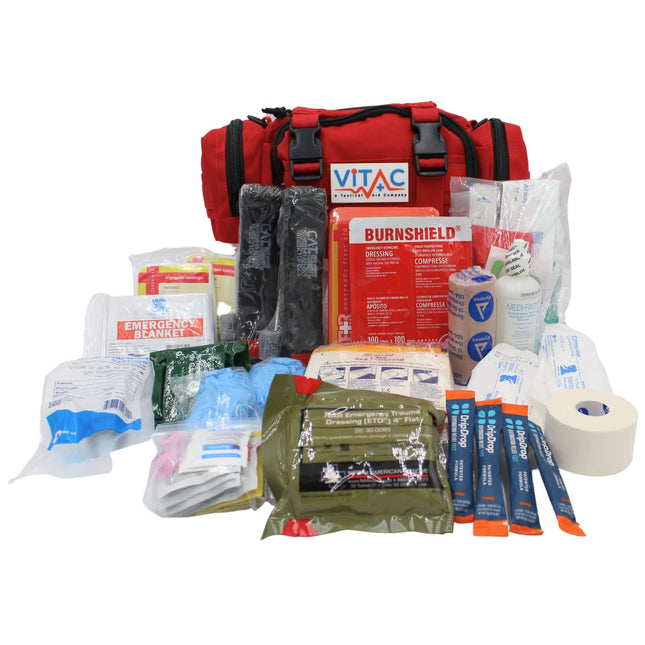

Built for when help is 2+ hours away. Includes 138 organized supplies, CAT® tourniquets, QuikClot®, wound care, splinting, medications, hydration support, and survival essentials.
$279.99
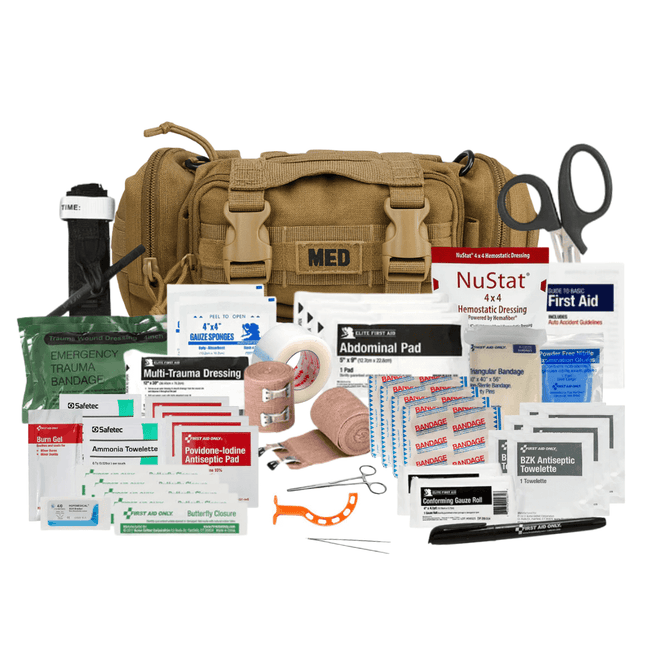

Keep essential trauma tools organized and ready so you can respond faster, stay calmer, and act with more confidence when serious injuries happen.
$124.95 - $224.73


A trauma backpack built to keep advanced bleeding-control and airway tools organized so you can respond faster and with more confidence in high-stress emergencies.
$269.97 - $319.97


Keep your core first aid and bleeding-control tools organized in one compact kit so you can respond faster and with more confidence at the range, in the vehicle, outdoors, or at home.
$139.95 - $169.95


Keep essential bleeding-control and trauma tools organized in one compact IFAK so you can respond faster and with more confidence when serious injuries happen.
$129.95


Everything you need to handle burns, bleeding, fractures, and airway emergencies — organized, professional-grade, and ready to grab.
$224.95


The Headrest IFAK transforms any vehicle into a rapid-response trauma station—compact, secure, and ready when every second counts.
$346.69

The STOMP Medical Kit – Contents Only delivers the complete 329-piece professional trauma loadout—ready to restock, rebuild, or customize your medical system without the bag.
$399.95


Engineered for mass-casualty response. NAR®-sourced C-A-T® tourniquets, HyFin® chest seals, and MARCH-organized layout let trained teams stabilize 2–4 critical patients before EMS arrives.
$371.15 - $399.49

A complete, 380+ piece trauma and medical response kit designed for speed, organization, and reliability—because every responder deserves professional-grade readiness.
$162.70


The Mini Medic Kit delivers full-scale trauma capability in a compact, modular design—engineered for professionals who demand adaptability, speed, and precision under pressure.
$923.49 $899.97


The Range Trauma Aid Kit – Hard Case delivers professional-grade trauma capability in a rugged, watertight design—ready for any range emergency.
$665.29


The Mass Crisis Incident Kit delivers scalable, lifesaving capability—empowering ordinary people to respond to extraordinary events with 40 ready-to-use trauma kits.
$821.29


Most of our trauma kits and first aid supplies qualify for HSA and FSA reimbursement. Don't let your benefits expire — invest them in gear that could save a life.

We've been downrange. We know what it costs to be unprepared. ViTAC was built by U.S. Army Special Operations veterans to make sure the people who run toward the threat — and the families who depend on them — have gear that works when everything is on the line.
— ViTAC Solutions Founders | 40+ years combined Special Operations experience





A high-risk workplace is any environment where the potential for severe trauma—crush injuries, lacerations, falls, burns, or machinery accidents—exceeds what a standard office first aid kit can address. Construction sites, manufacturing floors, oil and gas operations, warehouses with heavy equipment, and utility field crews all share one thing: when an incident happens, seconds matter, and basic bandages aren't enough.
These environments require trauma-ready first aid systems that prioritize life-threatening bleeding control, airway management, and rapid stabilization. That's the difference between a workplace first aid kit and a high-risk workplace trauma kit: one handles minor cuts and headaches, the other is built to keep someone alive until EMS arrives.
Not all high-risk workplaces are the same. Use these criteria to match your kit to your operational reality:
Effective high-risk kits layer basic first aid (bandages, gauze, tape, gloves) with trauma-specific tools designed for life-threatening emergencies. Core trauma components include:
Our kits range from compact personal IFAKs (individual first aid kits) to fully stocked EMT-style jump bags with 300+ pieces. Every configuration is built around the same principle: stop the bleeding, protect the airway, stabilize until help arrives.
This is for you if: You manage safety for construction crews, manufacturing teams, warehouses, utilities, or any environment where OSHA compliance is baseline and real trauma risk is present. You need gear that your team can deploy under stress, that meets or exceeds regulatory standards, and that reflects the seriousness of your duty of care.
This may not be for you if: You're outfitting a low-hazard office, retail space, or environment where the primary need is minor wound care and over-the-counter medications. For those settings, a general-purpose first aid kit is more appropriate and cost-effective.
We're a veteran-owned business built on field-tested credibility. Every kit we assemble reflects real-world trauma response principles, not just compliance checklists. Our customers include safety managers who understand that the best first aid kit is the one your team can actually use when adrenaline is high and time is short. We don't make medical claims or guarantees—we provide tools, and we back them with straightforward guidance on selection, placement, and training considerations.
Building a complete workplace safety program goes beyond buying a kit. Explore our related collections and resources to ensure your team is truly prepared:
Browse the collection below to compare configurations, read detailed product specs, and find the right fit for your site. Every kit is built to perform when it matters most.
What's the difference between a standard first aid kit and a high-risk workplace trauma kit?
Standard first aid kits address minor injuries like cuts, burns, and sprains with bandages, ointments, and basic supplies. High-risk workplace trauma kits include life-saving tools like tourniquets, hemostatic gauze, and chest seals designed to control severe bleeding and manage traumatic injuries until EMS arrives. If your workplace involves heavy machinery, heights, or hazardous materials, trauma-ready gear is essential.
How do I know which kit size or configuration is right for my facility?
Consider your team size, hazard profile, and EMS response time. A small crew in an urban area may need one or two personal IFAKs or a compact jump bag, while a remote industrial site with 50+ workers should have multiple wall-mounted kits, vehicle-based trauma bags, and a central response backpack. Match the kit's contents and accessibility to your actual risk and response workflow.
Are these kits OSHA compliant?
OSHA requires employers to provide adequate first aid supplies based on workplace hazards, but it doesn't specify exact kit contents. Our high-risk workplace kits are designed to meet or exceed typical OSHA expectations for hazardous environments and include trauma components that align with modern bleeding control and emergency response standards. Always consult your safety advisor or OSHA guidelines for your specific industry.
Do I need special training to use tourniquets and chest seals?
Basic training significantly improves outcomes, but tourniquets and chest seals are designed to be intuitive under pressure. We recommend Stop the Bleed training (free and widely available) or workplace-specific first aid courses that cover trauma response. Even 30 minutes of hands-on practice can prepare your team to act confidently in an emergency.
How often should I inspect or replace supplies in a workplace trauma kit?
Inspect kits quarterly for expired items, damaged packaging, or missing components. Hemostatic gauze, chest seals, and gloves have shelf lives (typically 3–5 years); tourniquets and trauma shears are durable but should be checked for function. After any use, restock immediately. Assign a responsible person and keep a simple log to stay audit-ready.
Can these kits be mounted in vehicles or on walls?
Yes. Many of our kits include MOLLE webbing, rip-away panels, or mounting straps for walls, vehicles, or equipment. Vehicle-mounted options like headrest IFAKs keep gear accessible without taking up cargo space. Wall-mounted kits work well in fixed facilities. Choose based on where your team will need fastest access during an incident.
What's the difference between an IFAK and a jump bag?
An IFAK (Individual First Aid Kit) is a compact, personal-carry kit designed for one responder to treat one patient, typically focused on bleeding control and basic trauma. A jump bag is a larger, team-level kit with supplies for multiple patients and a broader range of injuries, often used by EMS, safety officers, or site medics. IFAKs are faster to deploy; jump bags offer more comprehensive care.
Do you offer refill packs or replacement components?
Yes. We offer trauma refill packs and individual components so you can restock after training exercises or real-world use without replacing the entire kit. This keeps your program cost-effective and ensures you're never caught without critical supplies. Check individual product pages for compatible refills and replacement parts.