

- Bleeding Control Focused
- Trusted Components
- Duty + Everyday Options
Trusted by Law Enforcement & Tactical Professionals


-


North American Rescue Patrol Vehicle Trauma Kit | Field-Ready Law Enforcement Med Kit
The Patrol Vehicle Trauma Kit w/ Combat Gauze delivers dual-compartment, patrol-ready trauma capability—fast, organized, and built for real-world response.
$327.39
-


Emerge Survival Ultimate Survival Med Kit — 4-Person Trauma First Aid System (315 pcs)
Massive capability. Life-saving tools. Ready for the worst.
$525.00
-

$89.95
-


Elite First Aid Enhanced IFAK – Pro Trauma Kit w/Tourniquet & Chest Seals
Compact, capable, and combat-proven—the ViTAC Enhanced IFAK equips you to control bleeding, manage airways, and stabilize trauma when every second counts.
$164.95
-


Elite First Aid Recon IFAK – Pro | First Aid & Trauma Kit
$182.85
-


North American Rescue K9 RUF Kit – Rapid Utility First Aid System for K9 Handlers
$549.99
-


North American Rescue K9 Tactical Field Kit – Canine Trauma & Emergency Care System
$415.99 $403.89
-


North American Rescue Crisis Incident Response Kit | Multi-Person Trauma Bag
Engineered for mass-casualty response. NAR®-sourced C-A-T® tourniquets, HyFin® chest seals, and MARCH-organized layout let trained teams stabilize 2–4 critical patients before EMS arrives.
$371.15 - $399.49
-


$249.95
-


MediTac Kits MediTac Bleeding Control Kit
$159.95
-

Elite First Aid First Responder Jump Bag - 380+ Pieces
A complete, 380+ piece trauma and medical response kit designed for speed, organization, and reliability—because every responder deserves professional-grade readiness.
$162.70
-


North American Rescue K9 Mini Medic Kit | Multi-Mission Trauma Backpack
The K-9 Mini Medic Kit delivers professional-grade trauma and canine medical capability in one compact, modular system—because every mission deserves a partner’s protection.
$769.99
-


North American Rescue Multi-Mission Expeditionary Response Kit (MMERK) – Field Trauma System
$4,209.99
-


North American Rescue EOD Medical Kit (EODMK) | Explosive Ordnance Disposal Trauma System
The EODMK delivers elite-level trauma capability for explosive ordnance professionals—modular, field-proven, and built to perform in the world’s most dangerous environments.
$2,449.99
-

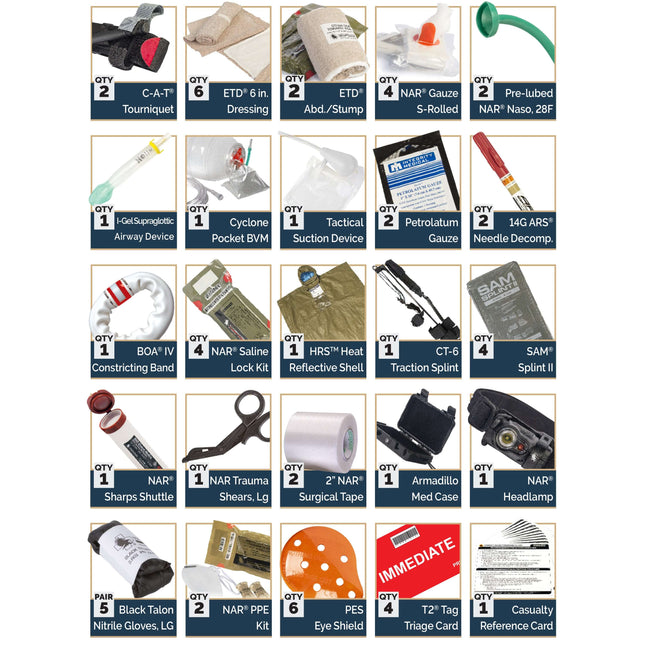
North American Rescue Medic Trauma Pack (CCRK®) – Complete Combat Casualty Response Kit
$1,849.99
-


North American Rescue NAR-5 SAR Aid Kit – Search & Rescue Level A Medical Response System
$1,519.99
-


North American Rescue Mini Medic Kit – Compact Multi-Mission Trauma Aid System
The Mini Medic Kit delivers full-scale trauma capability in a compact, modular design—engineered for professionals who demand adaptability, speed, and precision under pressure.
$923.49 $899.97
-


North American Rescue Solo IFAK | Compact Individual First Aid & Trauma Kit
The Solo IFAK is a professional-grade, personal trauma kit—compact, capable, and ready to save a life when you’re the only responder.
$220.59
-


North American Rescue Range Trauma Aid Kit | Hard Case Range First Aid Kit
The Range Trauma Aid Kit – Hard Case delivers professional-grade trauma capability in a rugged, watertight design—ready for any range emergency.
$665.29
-


Emerge Survival Emergency Med Kit w/2-Person Trauma First Aid Bag
$215.00
-


MediTac Kits Deluxe Tactical Medical Response Backpack
$699.95


Your pre-tax dollars can fund your preparedness.
Most of our trauma kits and first aid supplies qualify for HSA and FSA reimbursement. Don't let your benefits expire — invest them in gear that could save a life.

Our Mission.
We've been downrange. We know what it costs to be unprepared. ViTAC was built by U.S. Army Special Operations veterans to make sure the people who run toward the threat — and the families who depend on them — have gear that works when everything is on the line.
— ViTAC Solutions Founders | 40+ years combined Special Operations experience
Proud Partners Of





Add'l Info
If You Only Remember This:
- Individual First Aid Kits (IFAKs) are compact, purpose-built trauma kits designed for immediate bleeding control and life-threatening injury response in the field
- The right IFAK matches your training level, carry method, and environment—whether you're a first responder, outdoor professional, or prepared citizen
- Quality components matter: tourniquets, hemostatic gauze, chest seals, and pressure dressings should meet TCCC or similar field-proven standards
What Is an Individual First Aid Kit (IFAK)?
An Individual First Aid Kit—commonly called an IFAK—is a specialized medical pouch designed to treat traumatic injuries in high-stress, time-critical situations. Unlike general first aid kits that focus on minor cuts and scrapes, IFAKs prioritize life-saving interventions: controlling severe bleeding, managing chest trauma, and maintaining airway patency until professional medical care arrives.
Originally developed for military and tactical use, modern IFAKs have become essential gear for law enforcement, outdoor professionals, competitive shooters, and anyone serious about emergency preparedness. These kits are built around the principles of Tactical Combat Casualty Care (TCCC) and focus on the leading preventable causes of death in trauma scenarios.
How to Choose the Right IFAK for Your Needs
Training Level & Skill Set
Match your kit contents to your actual training. A tourniquet and pressure bandage require minimal instruction, while chest seals and nasopharyngeal airways demand proper technique. Choose kits that align with certifications you hold—Stop the Bleed, Wilderness First Responder, EMT, or tactical medical training.
Carry Method & Mounting System
Consider how you'll carry your IFAK daily. Belt-mounted pouches offer quick access for range use or patrol work. MOLLE-compatible designs integrate with plate carriers and tactical packs. Low-profile ankle or EDC kits suit civilian concealed carry. The best IFAK is the one you'll actually have with you.
Environment & Use Case
Urban vs. wilderness settings demand different approaches. Backcountry kits may emphasize wound irrigation and blister care alongside trauma supplies. Tactical kits prioritize compact, ruggedized components that perform under stress. Vehicle-based kits can accommodate larger formats with expanded capabilities.
Component Quality & Standards
Verify that critical items meet recognized standards: CoTCCC-recommended tourniquets (CAT, SOFTT-W), hemostatic gauze with proven clotting agents (QuikClot, Celox), and vented chest seals from established manufacturers. Counterfeit medical gear exists—source from reputable suppliers.
Refill & Expiration Management
Hemostatic agents, chest seals, and medications have shelf lives. Choose kits with clearly marked expiration dates and accessible refill components. A well-maintained IFAK with fresh supplies outperforms a premium kit with expired contents.
Size & Weight Constraints
Balance capability with portability. Ankle IFAKs sacrifice capacity for concealment. Full-size blow-out kits provide comprehensive coverage but require dedicated carry systems. Assess your realistic carry tolerance and mission profile.
Who These Kits Are For (And Who They're Not For)
Best suited for:
Individuals with Stop the Bleed or higher-level medical training, outdoor professionals and guides operating in remote areas, competitive shooters and range officers, law enforcement and security personnel, prepared citizens building layered emergency readiness, and anyone who carries a firearm or works in high-risk environments.
May not be ideal if:
You have zero medical training and no plan to get any (start with a basic Stop the Bleed course first), you need a comprehensive kit for chronic conditions or routine first aid (consider a traditional first aid kit instead), or you're looking for the absolute cheapest option without regard to component quality (trauma care isn't the place to cut corners).
Why Component Quality Matters
Not all tourniquets stop blood flow effectively. Not all hemostatic gauze performs under real-world conditions. The components in a quality IFAK have been tested in combat medicine, emergency departments, and wilderness scenarios. When seconds determine outcomes, field-proven gear from established manufacturers provides the reliability you need.
Our curated selection emphasizes kits built around TCCC-recommended components, durable construction that survives harsh environments, and logical organization that supports rapid access under stress. Every kit represents a balance of capability, portability, and proven performance.
Building Your Trauma Readiness System
An IFAK is one layer in a comprehensive approach to emergency preparedness. Pair your individual kit with proper training, regular skills practice, and scenario-based drills. Consider how your IFAK integrates with vehicle kits, home supplies, and team equipment if you operate in group settings.
Knowledge expires faster than gear. Refresh your skills annually, rotate perishable supplies before expiration, and stay current with evolving best practices in pre-hospital trauma care.
FAQs
What's the difference between an IFAK and a regular first aid kit?
An IFAK focuses specifically on life-threatening trauma—severe bleeding, chest injuries, and airway compromise. Traditional first aid kits address minor injuries like cuts, burns, sprains, and basic wound care. IFAKs prioritize tourniquets, hemostatic gauze, chest seals, and pressure dressings rather than band-aids and antibiotic ointment.
Do I need medical training to use an IFAK?
Basic IFAK skills like tourniquet application can be learned in a 90-minute Stop the Bleed course. More advanced components like chest seals and airway adjuncts require additional training. We recommend matching your kit contents to your actual skill level and committing to proper instruction before carrying trauma gear.
How often should I replace IFAK components?
Hemostatic gauze typically expires 3–5 years from manufacture. Chest seals, tourniquets, and pressure dressings should be inspected annually for packaging integrity and replaced per manufacturer guidance. Rotate supplies before expiration and after any environmental exposure that compromises packaging.
What mounting system works best for everyday carry?
Belt-mounted pouches offer excellent accessibility for range use and open carry. MOLLE-compatible designs integrate with tactical gear and backpacks. Low-profile ankle or pocket kits suit civilian concealed carry. The best system is one you'll consistently carry and can access quickly under stress.
Are these kits TSA-compliant for air travel?
Most IFAK components are permitted in checked baggage. Scissors and shears must follow TSA edge-length rules for carry-on. Hemostatic gauze and chest seals are generally allowed but may require additional screening. Check current TSA medical supply guidelines before travel and consider a travel-specific configuration.
Can I build my own IFAK instead of buying a pre-made kit?
Absolutely. Many experienced users prefer custom builds tailored to their specific training, environment, and carry preferences. Start with TCCC guidelines as a baseline, source quality components from reputable manufacturers, and choose a pouch that supports organized, rapid access. Pre-made kits offer convenience and vetted component selection.
What's the minimum viable IFAK for someone just starting out?
A quality tourniquet (CAT or SOFTT-W), a compressed gauze or hemostatic gauze, a pressure bandage, chest seal, and trauma shears form a solid foundation. Pair this with Stop the Bleed training and you have capability for the most common preventable causes of trauma death. Expand from there based on training and use case.
How do I know if components are genuine and not counterfeit?
Source from authorized dealers and established retailers with direct manufacturer relationships. Verify packaging details, lot numbers, and expiration dates. Counterfeit tourniquets and hemostatic agents exist—especially on third-party marketplaces. When in doubt, contact the manufacturer directly to verify authenticity.